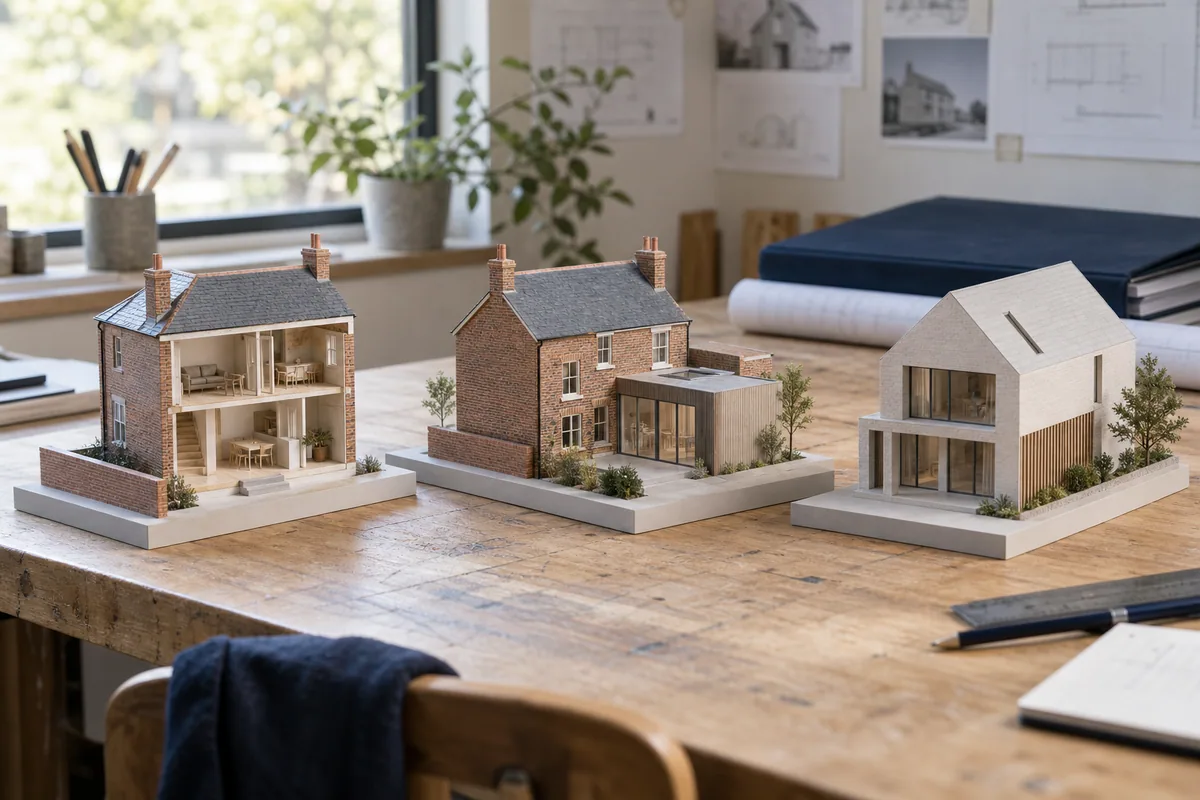
Compare what the money buys
When two or more written construction quotes arrive, check whether they price the same project before comparing totals. One may include engineering, disposal and painting; another may assume you will arrange them. The headline total becomes meaningful only after you understand the scope and the remaining uncertainty.
Build a comparison sheet before selecting a contractor. Use it to request clarifications, not to invent missing prices on a bidder's behalf. This guide offers an editorial comparison method; the examples are hypothetical and are not Toronto market-price estimates.
Give every bidder the same starting point
Record the date and revision of the drawings, a written scope, finish selections and known site conditions. Send the same package to each bidder. If you clarify a requirement during one site visit, send the clarification to everyone. Keep a list of changes so the final contract does not accidentally refer to an earlier design.
Ask each firm to state its assumptions. For example, are existing floors being retained or replaced? Will the household move out? Is access assumed through the driveway? Are service upgrades included? An assumption is not necessarily unreasonable, but it must be visible. Otherwise you cannot tell whether a low price reflects efficiency, a different interpretation or a missing task.
If the project itself is still undecided, first compare renovation, addition and rebuild scenarios; each route needs its own scope before bids can be compared.
Create a side-by-side scope table
| Item | What to compare | Question to resolve |
|---|---|---|
| Design and engineering | Included services and drawing revisions | Who pays to resolve missing design details? |
| Site preparation | Protection, access, demolition and disposal | What happens outside the renovated room? |
| Structure and services | Named work and assumptions about existing systems | What investigation supports the price? |
| Finishes | Product, quantity, installation and preparation | What is the actual allowance buying? |
| Management | Supervision, coordination and reporting | Who runs the work each week? |
| Completion | Testing, cleaning, deficiencies and records | What must be delivered at handover? |
Add a column for each bidder and enter “included,” “excluded,” “allowance” or “unclear.” Resist replacing “unclear” with an optimistic assumption. Send the sheet back for confirmation. This creates a common description of the project without requiring every company to use the same estimating software.
Separate allowances from the household contingency
An allowance is a provisional amount within a proposal for an item that has not been fully selected or defined. A household contingency is money you retain for uncertainty or changes. Neither term explains the other. Ask the contractor to define any budget terminology used in the offer.
Suppose one hypothetical quote includes a $4,000 supply allowance for fixtures and another includes $7,000. The $3,000 gap does not establish that either contractor's labour is cheaper. Identify the intended products and ask both to price the same selection. Check delivery, installation, accessories, tax and any handling markup. These example figures illustrate arithmetic only.
Do not apply one arbitrary percentage to every unknown. A poorly understood foundation deserves investigation; a choice between two cabinet handles may simply need a decision. List uncertainties individually, explain how they will be resolved and identify who holds the financial exposure.
Understand the price and change mechanism
Ask whether the offer is a fixed price, an estimate, a cost-plus arrangement or a combination. For cost-plus work, clarify which costs are reimbursable, how the contractor's fee is calculated and which records you can inspect. For a fixed price, identify exclusions and the circumstances permitting changes.
Ontario's renovation consumer guidance says that when an estimate forms part of the contract, the final charge generally cannot exceed it by more than 10% unless the consumer agrees to new work or a new price. Do not treat this as a universal contingency rule or assume every pricing arrangement is identical; obtain advice on the actual agreement.
A change record should identify the requested work, the revised amount, any credit for deleted work and the schedule effect. Decide who can approve it. A conversation with a trade on site should not accidentally become an undocumented purchase instruction.
If the payment or change provisions need legal review, Licata Law lists construction contracts and financing among its real estate services. Confirm the proposed review and fee before sharing the full contract.
Use the contractor interview questions to obtain answers about payment records and change approval from the person who would manage the job.
Add the costs outside the construction quote
Create a separate total-project budget. It may include design, investigations, application fees, temporary accommodation, storage, financing and work you buy directly. Mark whether tax is included in every figure. Keep your contingency visible so it is not silently spent on upgrades before construction starts.
For Toronto permit costs, use the City's current fee schedule and confirm which reviews apply to your proposal. Avoid copying a fee from a different house or an old article. Ask the project team to explain the basis of any fee allowance and who pays the City.
Timing also has a household cost. A proposal with a longer programme may increase accommodation and storage expenses. Ask for the reasoning behind the schedule and the decisions needed from you, rather than assigning a financial value to an unverified completion promise.
Make the final comparison reviewable
Request revised written quotations after material clarifications. Summarise the confirmed total, owner-paid items, unresolved risks and management arrangements on one page. Compare the evidence behind each offer as well as the amount.
Your next step is to resolve the largest remaining scope differences before signing. Keep the comparison and final revisions with the contract. If the winning price still depends on an important unknown, record the agreed investigation or change process so that both sides understand what comes next.
Sources & further reading
Public sources checked September 15, 2026. Confirm current requirements before acting.
- Ontario: Your rights when starting home renovations or repairs — Written estimates and contracts, estimate protections, and homeowner due diligence; checked September 15, 2026.
- City of Toronto: Building Permit Fees — Current fees and distinction between Zoning Applicable Law Certificate and Zoning Certificate; checked September 15, 2026.
- construction contracts and financing — Official client service description; checked 16 September 2026.