Decide what each pane should do
Each pane has its own balance of message, daylight, views and privacy: it can introduce a business, show opening hours, promote a product or screen part of an interior. Before choosing a graphic, identify the job of each pane. A treatment that suits a consultation area may not suit a retail display, and the main entrance has different information needs from a neighbouring window.
Take a photograph from inside and outside. Mark the entrance, customer sightlines, display areas and places where staff need a view. This simple map turns a vague request for “more branding” into a set of decisions that a designer and installer can discuss.
Give permanent and changing messages separate space
List the content you expect to keep for a long time: business identity, entrance directions or an enduring service description. Then list details that change, such as opening hours, seasonal offers or a temporary announcement. Ask for a layout that makes those different roles clear.
A useful planning exercise is to remove the promotion from the mock-up and check whether the underlying storefront still makes sense. Then change the promotion and see whether it can be replaced without redesigning the entire window.
Keep the copy focused. Walk past the frontage at a normal pace and decide which message a visitor needs first. Save detailed explanations for a place where someone has chosen to stop and read.
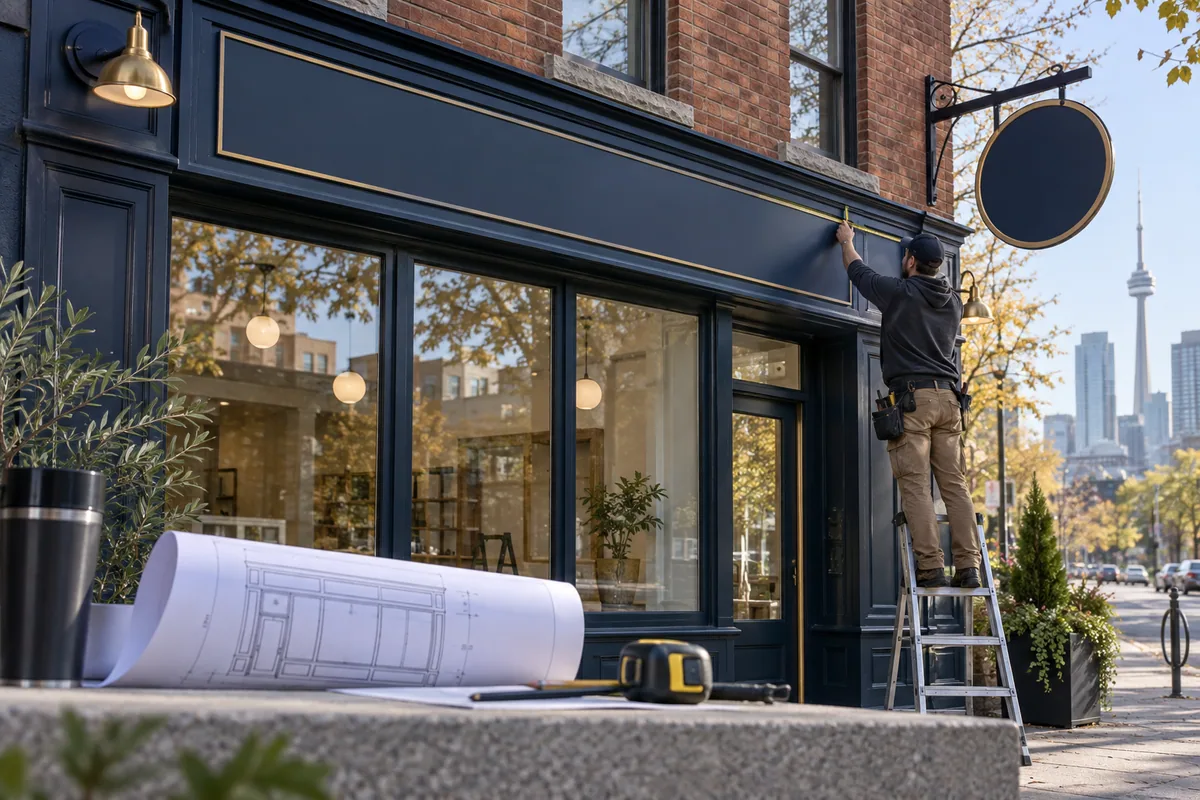
For the main sign above or beside the windows, use the storefront sign planning guide and coordinate both layouts on the same frontage photograph.
Ask to compare materials on your glass
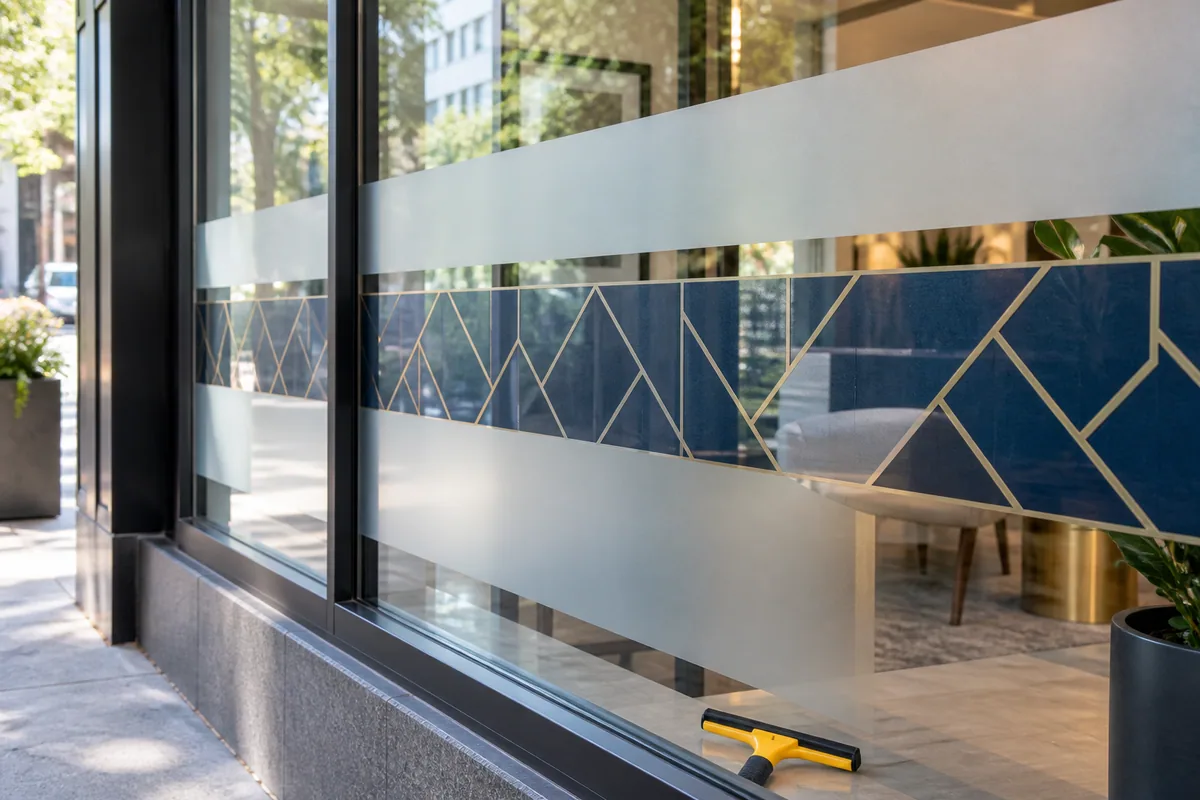
SpeedPro Etobicoke’s window graphics options include cut vinyl, printed graphics, frosted treatments and perforated film. These categories are starting points for a specification, not interchangeable answers to every window problem.
Ask the supplier to identify the proposed material, finish, application side and intended use. Request a sample on the actual glass when appearance, privacy or light is important. Check how lettering reads against the real interior rather than judging it only against a plain digital background.
Discuss existing coatings, previous film and any known glass information with the installer. Ask what needs checking for compatibility before ordering, and who will obtain the necessary details.
Evaluate the view from both sides
Stand where customers and staff will normally be. Consider the view across a desk, through a display area and beside the entrance. Mark the portions where maintaining a sightline matters, and those where screening is the priority. Let those observations guide the composition.
Review a sample under the lighting conditions in which the business operates. A daytime check alone may leave unanswered questions about the evening appearance. If privacy is a project goal, describe what should be screened, from which viewpoint and at what time, then ask the supplier how the proposed treatment will be evaluated.
Record the agreed expectation in plain language. “Screen seated conversations from the pavement” gives the discussion more direction than a request for a vaguely private look.
Check the proposal against the property
For a Toronto premises, consult the City's general sign inquiries about the actual window proposal. Its guidance distinguishes sign conditions and identifies factors relevant to window signage. Provide the address, proposed graphic area, wording, placement and any electronic display details when asking what applies. Do not treat all window graphics as one approval category.
Ask the property owner or manager for their requirements as a separate step. Establish who will collect the responses, keep the records and tell the designer if the proposal needs to change.
Have the installer confirm final pane dimensions and boundaries. Number the panes on photographs so the proof, measurement notes and installation plan refer to the same locations.
Make the quotation specific
Request a pane-by-pane schedule showing the graphic, size, material and installation side. Ask whether the proposal includes artwork, a site visit, removal of old material, surface preparation and installation. Identify anything that depends on a further inspection.
Ask how the supplier will deal with joins, frames, handles and other interruptions to the design. If a logo or line of text crosses several panes, review a complete elevation as well as individual panel proofs. Confirm which dimensions are final and which remain estimates.
For temporary campaigns, ask about the proposed removal process and what replacement work would involve. Obtain written care instructions for the supplied material so routine cleaning can follow the supplier's guidance.
Use the sign-company service comparison to find suppliers that publish window-graphics services, then ask them to quote the same pane schedule.
Plan installation and handover
Agree when the installer can access both sides of the glass and what the business needs to move beforehand. Discuss display furniture, blinds, signs, stock and any activity that occupies the work area. Ask for a clear preparation list rather than trying to infer what the installation team needs.
Nominate a contact who can answer placement questions and compare the work with the approved proof. If an on-site change is proposed, pause long enough to record the revised arrangement and its implications before it is implemented.
At handover, keep the approved layout, material details, care instructions and supplier contact together. Photograph the completed panes for your own maintenance and future ordering records.
Review the result as a visitor
Once the frontage is ready for use, approach it from the usual walking directions and step inside. Check whether the entrance, business identity and essential information are easy to find. Ask staff whether the agreed sightlines work during their normal activities.
Use that review to plan future updates. The goal is a window treatment with a clear purpose and manageable upkeep, supported by a record that makes the next change straightforward.
Sources & further reading
Public sources checked September 15, 2026. Confirm current requirements before acting.
- SpeedPro Etobicoke: window graphics — Published examples of cut vinyl, printed graphics, frosted treatments and perforated film.
- City of Toronto: general sign inquiries — Window-sign guidance and proposal factors; exact requirements should be confirmed for the specific address and design.