Give the sign a clear job
For a business with premises in mind, this guide turns the frontage into a sign brief, an approved proof and an installation plan.
Start by writing one sentence about what a person should understand from your storefront: the business name, the service offered, or the entrance to use. Try to choose a primary job. When every message receives equal emphasis, it becomes harder to decide which words deserve the largest space.
Walk toward the premises from the directions customers actually use. Photograph the frontage from across the road, along the sidewalk and near the door. Note what trees, parked vehicles, awnings or neighbouring signs hide. These observations give the designer a practical starting point beyond the logo file.
Compare formats against the frontage
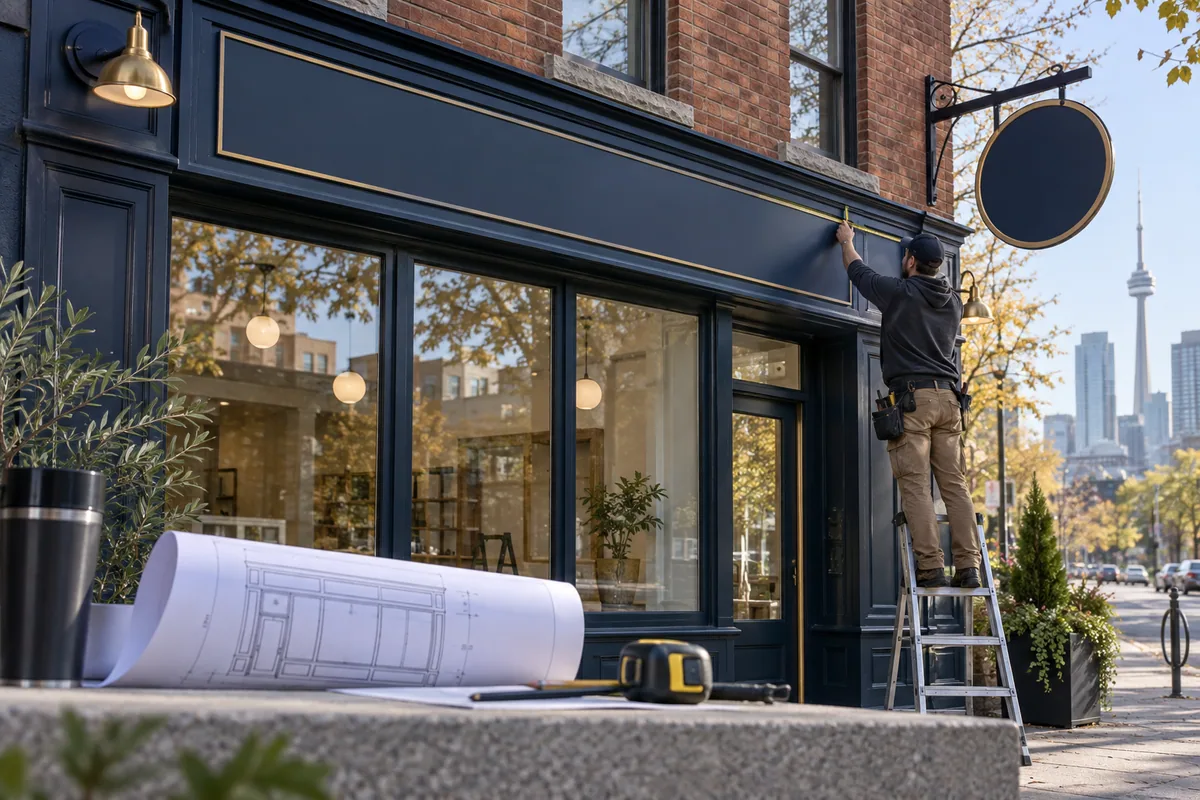
Ask a supplier to show the proposed format on a photograph of your building. A flat panel, individual letters and a projecting sign use the frontage differently. Treat the first mock-up as a conversation about position, scale and legibility. A rendering alone cannot confirm the mounting detail, material or approval status.
SpeedPro Etobicoke’s storefront sign range includes dimensional letters, sign boxes and illuminated options.
For each format under consideration, ask where the attachments will sit, what the sign looks like from an angle and how a future name change would be handled. If illumination is proposed, request a description of the lighting effect and a separate explanation of the electrical work.
Make the artwork earn its space
Prepare a short hierarchy before discussing colours: essential information first, a useful descriptor second, optional detail last. Try two mock-ups with different amounts of wording and compare them at the same small size. Ask someone unfamiliar with the business to read each one briefly and tell you what they remember.
Check the complete frontage, including door lettering and window promotions, so the same message is not competing with itself. Keep permanent identity separate from information you expect to change frequently. For example, a stable business name can sit above an entrance while opening hours occupy a replaceable door graphic.
Ask for colour references and a material sample when appearance is central to the decision. Confirm what the digital proof can and cannot represent.
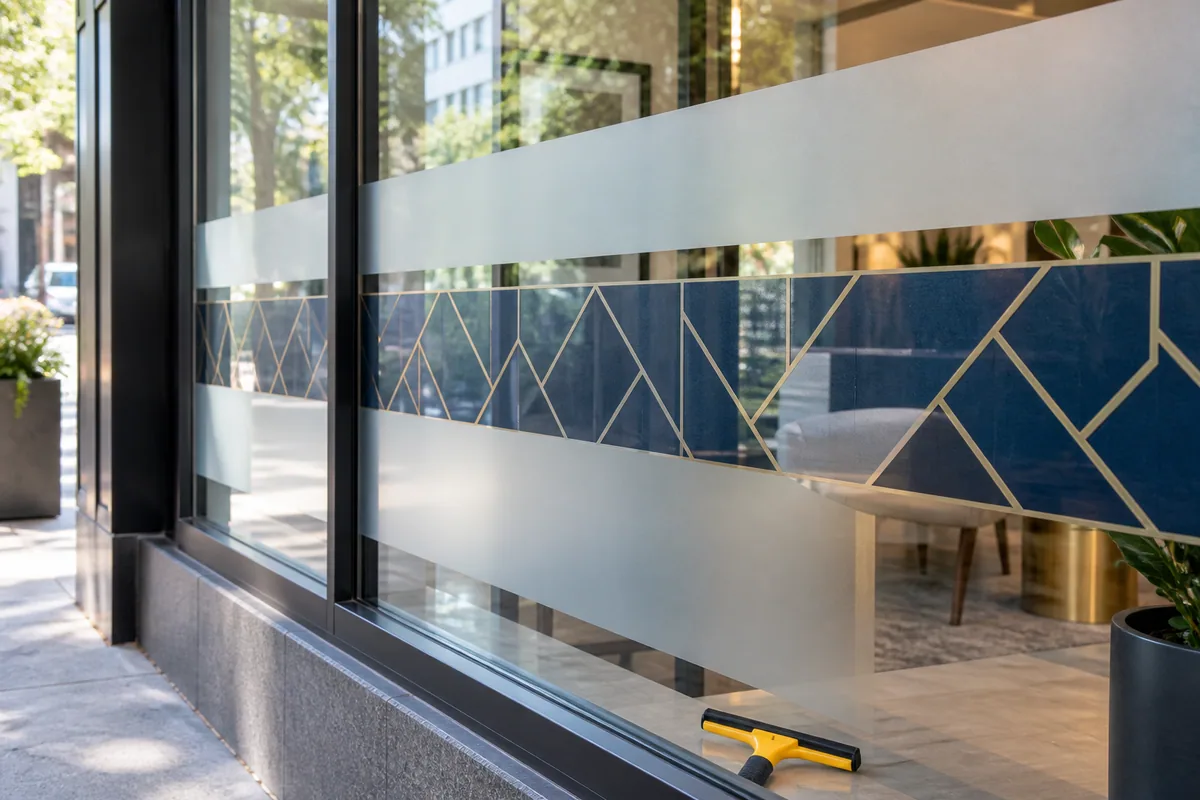
If the design also covers the glass, prepare a separate window graphics plan for light, privacy and sightlines.
Settle the site questions early
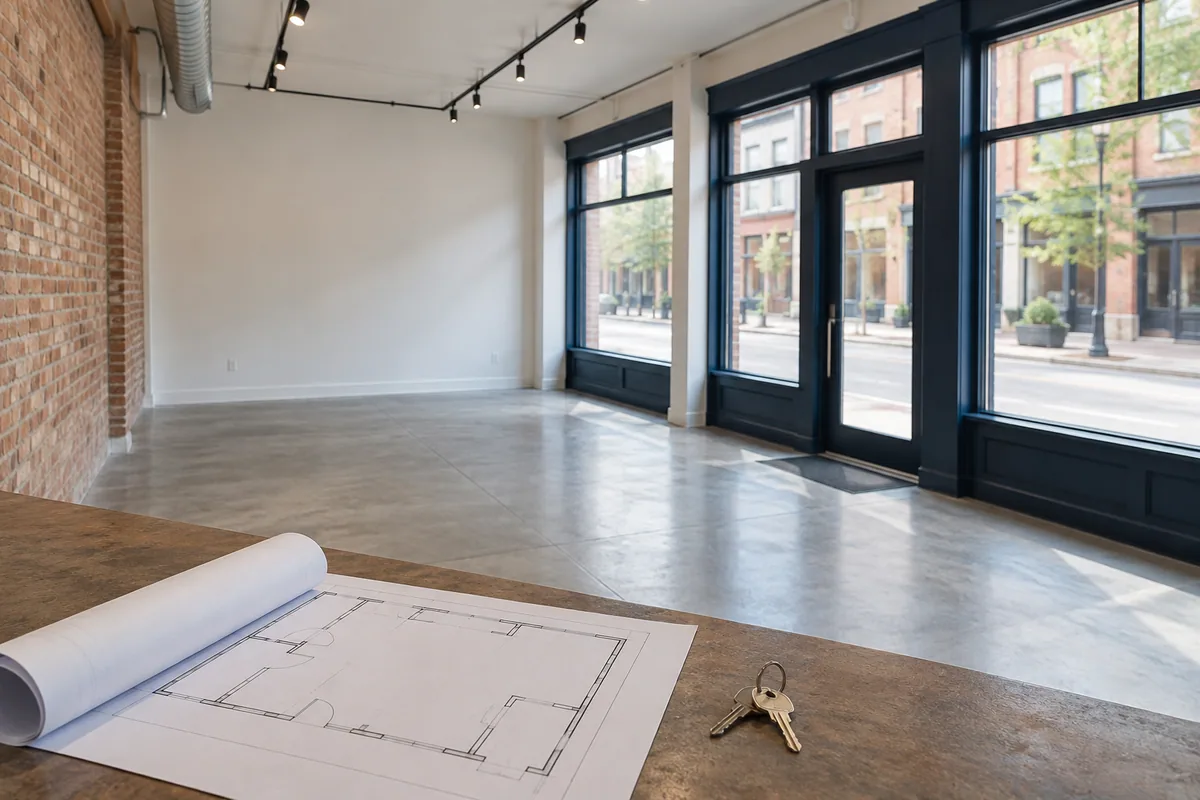
Give the supplier an address, photographs, access details and your property contact. Identify any old sign, unused fixings or visible surface damage. Ask who will inspect the wall, verify dimensions and determine a suitable attachment method. Avoid assigning those responsibilities by assumption.
The City of Toronto's sign information and general sign inquiries are starting points for checking a specific proposal. Have the address, size, placement and illumination details ready when asking what approvals apply. Request a clear owner for that follow-up before committing the project to production.
Also ask the landlord or property manager for the building's sign criteria and review process. Keep their response with the approved drawing so everyone is working from the same version.
Request a quotation that shows the whole job
Ask for a written scope covering design, materials, dimensions, finishes, manufacturing and installation. Then work through the edges of the project: removing the old sign, making good redundant fixings, providing electrical work, gaining access and cleaning up. Some items may sit with another contractor; the useful outcome is knowing who owns each one.
Separate the base proposal from alternatives. A larger sign, a lighting option and an additional window graphic should be easy to identify as individual choices. Ask how many artwork revisions are included and what event starts the production schedule.
Use the same brief when seeking another quotation. Where prices differ, compare the specified work and exclusions before drawing a conclusion about value.
Approve a complete proof
Nominate one person to consolidate feedback. Give that person the confirmed business spelling, logo files, colour references and any property requirements. When several people send separate changes, create a fresh consolidated proof rather than relying on a chain of informal messages.
Check dimensions, spelling, orientation, spacing, mounting position and the exact wording of any descriptor. Ask the supplier to explain any important detail that remains illustrative. If a final site measurement changes the layout, request an updated proof and approval record.
Save the final file with a clear version name and approval date. The aim is a single reference that the designer, fabricator, installer and business owner can all identify.
Plan installation around the business
Discuss when the frontage can be accessed, where equipment can be placed and how customers will reach the entrance while work is underway. Ask the installer to set out the access arrangements required for the proposed method. Build the appointment around those confirmed arrangements, rather than treating installation as a delivery with no other dependencies.
If a launch date matters, identify the earlier decisions that support it: site survey, property review, any required approvals, artwork sign-off and production. Ask how you will be told if one slips.
At handover, obtain care instructions, warranty terms, supplier contacts and a record of the installed specification. Those details will be useful when a graphic, light source or business name eventually needs attention.
A useful first enquiry
Send a short message containing the premises address, the purpose of the sign, photos, approximate size, preferred opening date and the status of property approval. Say which details are undecided and ask what the supplier needs next. A clear enquiry makes it easier to move from inspiration to an accurate proposal, without pretending the early sketch resolves every site question.
With the brief ready, use the Toronto and Etobicoke sign-company comparison to identify suppliers whose published services match the project.
Sources & further reading
Public sources checked September 15, 2026. Confirm current requirements before acting.
- SpeedPro Etobicoke: storefront signs — Published dimensional-letter, sign-box and illuminated-sign options.
- City of Toronto: sign information — Official entry point for sign applications and information.
- City of Toronto: general sign inquiries — Proposal-specific inquiry routes and information about sign districts and permits.