Choose the message before the coverage
Before choosing between a full wrap, partial wrap or separate decals, decide what somebody should remember about the vehicle. A useful starting brief is a business name, a clear description of the service and one contact route. Add more only when it earns its place. A vehicle graphic needs to work as part of the vehicle's shape, not merely as a rectangular advertisement placed over a photograph.
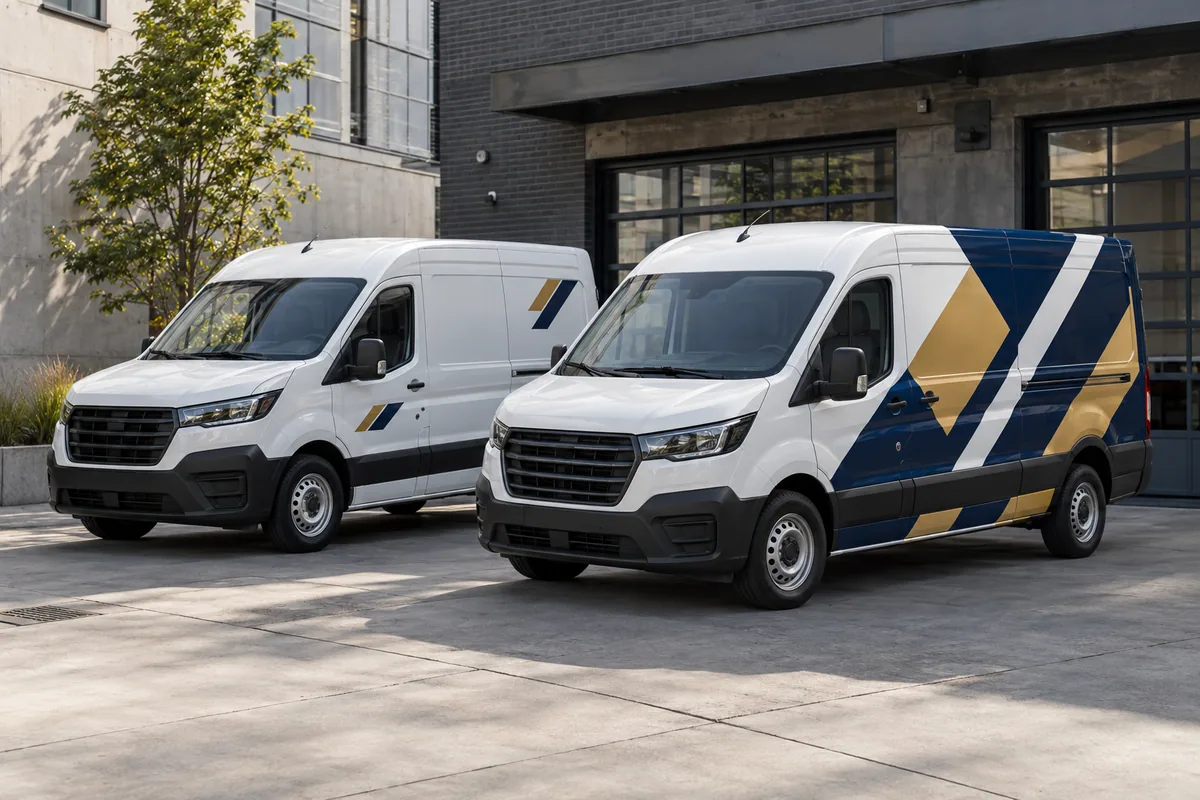
Vehicle graphics from SpeedPro Etobicoke include decals, partial wraps and full wraps. Ask for drawings that define the exact coverage being quoted; the format name by itself is not a complete specification.
When separate decals deserve a look
Put decals on the shortlist when your proposed message is compact or you want to preserve much of the vehicle's original appearance. Request a layout for each visible side and the rear, with the vehicle's paint colour included in the mock-up. Look at the whole shape instead of judging the logo in isolation.
Discuss which details might change. A phone number, service descriptor or local branch name may need different treatment from a long-lived logo. Ask whether those elements could be replaced individually, and have the supplier explain the implications for the surrounding finish.
Do not infer the final price from the word “decal.” Request the dimensions, number of pieces, preparation and installation scope so the proposal is concrete.
When partial or full coverage enters the conversation
Consider a partial-wrap proposal when you want a more connected visual treatment across selected panels. Ask the designer to show precisely where the graphic ends and how those edges relate to the vehicle's colour. Review both sides separately: sliding doors, fuel flaps and other features may create different design conditions.
For a full-wrap proposal, ask what “full” includes. Have the quotation identify the roof, bumpers, mirrors, handles and any excluded areas rather than leaving coverage to interpretation. Request a version of the artwork that marks those boundaries.
Compare the options using the same core message. If one concept has much more information than another, you are evaluating two communication approaches as well as two coverage choices.
Use the actual vehicle as the reference
Supply the exact make, model, year, body style and photographs. Note accessories, existing graphics, previous repairs and any concerns about the finish. Ask the installer what inspection is needed before accepting the vehicle and what findings could change the plan. Request a written record of the agreed preparation responsibilities.
Walk around the vehicle with the proof in hand. Check seams, door gaps, wheel arches and areas interrupted by equipment. Open the doors that staff use during a normal working day and consider what message remains visible. Ask the designer to resolve awkward letter breaks on the drawing.
If the vehicle is leased, obtain the owner's conditions for graphics and removal before approving the job. Keep that response with the project records.
Make the contact route practical
Choose the contact action that fits the business and the vehicle's use. A simple website address, recognisable business name or clearly presented phone number may be enough. Test the proposed layout at a small size to see whether the key information remains easy to pick out.
Review a parked-view scenario separately from a road-view scenario. If you include a QR code, position it for someone standing safely beside a parked vehicle; do not build the campaign around drivers scanning it in traffic. Test the printed proof with different phones before authorizing production.
Avoid filling unused space automatically. Ask what can be removed while preserving the service, identity and next step. A spare area can help the remaining message become clearer.
Compare the complete cost and downtime
Request separate details for artwork, material, preparation, removal of old graphics and installation. Ask whether the quotation depends on a satisfactory inspection and what would trigger a revised price. Confirm how changes are approved, rather than assuming extra work will be absorbed.
Plan the booking around operations. Identify who will deliver and collect the vehicle, how long you should reserve it, and whether the proposed schedule includes any required preparation or post-installation waiting period. Get product-specific instructions from the supplier.
For several vehicles, ask whether a phased rollout is possible. Compare the operational inconvenience of taking multiple vehicles out at once with the extra coordination of separate appointments.
Think through replacement and removal
Ask for the specified material and finish, written care guidance and the terms that apply to the proposed installation. Discuss how a damaged panel, a changed phone number or a replacement vehicle would be handled. Request clarification about colour matching across later production runs instead of assuming an exact future match.
Make removal part of the conversation at the start. Ask who should perform it, what inspection is needed and which conditions could affect the underlying finish. Treat promises about lifespan, paint protection or removability as product-and-vehicle questions that need a written answer for your project.
Keep approved artwork and specification records where a future fleet manager can find them.
A simple way to decide
Ask for two options: the smallest practical treatment that communicates your message, and a broader treatment with the same message. Compare their coverage drawings, responsibilities, complete quoted totals and vehicle booking needs. Then choose the option that fits the actual vehicle, operational schedule and intended use.
For a fleet, consider reviewing one completed vehicle before releasing the remaining batch. Agree beforehand which details that review will settle and whether it affects the schedule or price.
After deciding which coverage options to price, use the sign-company service comparison to shortlist suppliers that publish vehicle-graphics services.
Sources & further reading
Public sources checked September 15, 2026. Confirm current requirements before acting.
- SpeedPro Etobicoke: vehicle wraps — Published decals, partial-wrap and full-wrap categories. Project-specific specifications require confirmation.