Build the event brief before choosing the display
A display order should describe what your team needs to do at the event, as well as what the graphics should look like. Work through these ten questions with the person attending, the person approving the artwork and the person handling logistics. Write down an owner and a due date for each unresolved item.
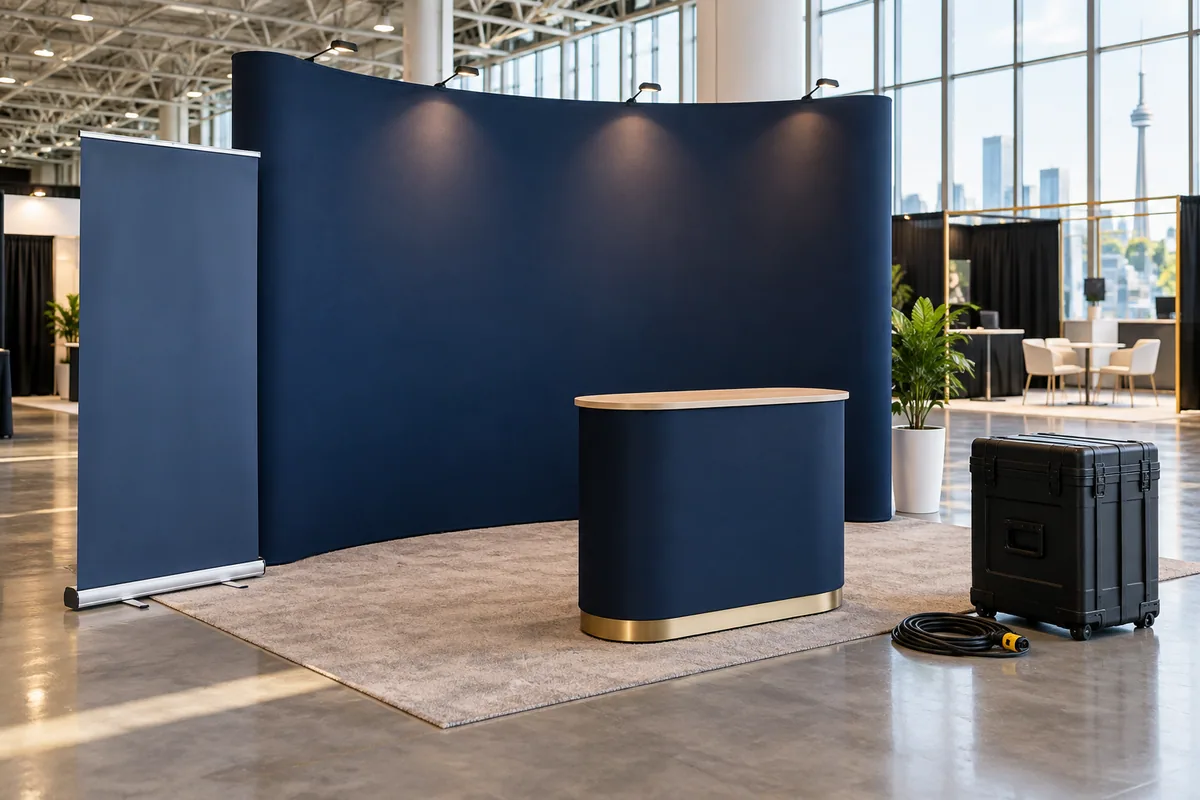
SpeedPro Etobicoke’s trade show display range includes media walls, banners, table coverings and related accessories. Treat the catalogue as a set of possible components; the event brief determines which ones belong in your order.
1. What should a visitor do next?
Choose one primary action: watch a demonstration, discuss a project, book a meeting or request information. Write the invitation in everyday language before designing the backdrop. Then identify what the team needs to support that action, such as a demonstration surface, a place for a conversation or a straightforward contact form.
Agree how you will recognise a useful outcome after the event. Count completed next steps separately from casual conversations so your evaluation reflects the purpose you chose.
2. What space have you actually booked?
Obtain the confirmed floor plan, booth dimensions and location from the organiser. Mark open sides, neighbouring booths, fixed obstacles and any furniture included in the booking. Ask the organiser about height, sightline, lighting, power and access requirements for the proposed setup.
Send the relevant event instructions to your display supplier. Do not assume that a display shown in a catalogue fits your allocated space simply because its headline width sounds right.
3. What must be readable from each distance?
Assign different jobs to the backdrop, a counter sign and a handout. The backdrop can introduce the business and its main offer; the closer material can explain details. Test the proposed composition as a small image before becoming absorbed in fine type.
Have somebody who did not write the copy describe the offer after a quick look. If they need a verbal explanation, revise the hierarchy or wording before adding more graphics to the order.
4. Where will people and equipment go?
Sketch the actual floor footprint, including staff, visitors, storage, demonstrations and any seating. Tape the outline on a floor if possible, then practise the intended conversation or demonstration within it. Check whether a table would become an unwanted barrier at the front.
Mark where bags, spare literature and charging equipment will live. A display can look clear on a rendering while daily-use objects take up the space needed for people to move and talk.
5. Which pieces need to work together?
List every component in one schedule: backdrop, banners, counter, tabletop graphics, handouts and digital screens. Give each a purpose. Remove pieces that repeat an already clear message unless there is a practical reason for the repetition.
Ask the supplier to distinguish printed graphics from hardware and accessories. Confirm which carrying cases, supports or other components are included. If you already own equipment, provide its exact model and request confirmation that new graphics will fit.
If you need a supplier for the planned components, the sign-company service comparison identifies published event-display services to confirm directly.
6. Who owns the final artwork approval?
Choose one person to gather feedback and approve the complete set. Request the production templates before the design is final. Check spelling, image permissions, logo versions, contact details and the intended relationship between neighbouring panels.
Ask how trim, seams, folds or hardware affect important content. Keep the final approved files and proof record together. If a late change affects one component, review its relationship with the rest rather than treating it as an isolated correction.
7. How will everything reach the booth?
Record packed dimensions, weight, number of cases and the person responsible for transport. Compare those details with the available vehicle, loading route and delivery arrangements. Obtain the organiser's instructions for receiving goods, access windows and storage of empty containers.
Plan the return trip with the same care. Assign someone to check that every component is packed after the event, and make sure labels and return instructions travel with the equipment instead of remaining in an office inbox.
8. Can the attending team assemble it?
Ask for assembly instructions and clarify the expected number of people, tools and time. Request a demonstration or arrange a practice setup before the event. Have the actual attending staff take part wherever possible.
During the practice, photograph the sequence, identify the individual parts and make a packing checklist. Confirm any event-specific rules about who may perform setup work with the organiser. Resolve those arrangements before arriving with equipment and an assumption.
9. What can be reused next time?
Separate information that is likely to remain useful from dates, temporary offers and campaign-specific claims. Ask which graphic panels can be replaced without replacing the entire display, and what files or hardware details you should keep for a future order.
Request care and storage instructions for the supplied materials. Decide who will inspect the kit after the event and report missing or damaged parts, while there is time to prepare for the next booking.
10. What is the last sensible approval date?
Work backwards from the date the display must reach you, allowing for proof review, production, delivery and a complete practice setup. Ask the supplier to confirm its proposed milestones and explain which decisions or missing items could move them.
Put the agreed dates in a shared calendar with named owners. The project is ready to order when the team can state the final components, approved artwork, confirmed responsibilities and delivery plan without relying on a last-minute clarification.
Sources & further reading
Public sources checked September 15, 2026. Confirm current requirements before acting.
- SpeedPro Etobicoke: trade show displays — Published display, media-wall, banner, table-covering and accessory categories.